Executive Overview
MID TERM RESULTS REPORT 2024 - 2025
INTRODUCTION
This Results Report presents WHO's end-of-biennium performance for the Programme Budget 2024–2025, marking the final assessment under the Thirteenth General Programme of Work. It provides a concise, evidence-led view of what was achieved, where targets were met, where progress fell short, and where the Secretariat's support has been most essential.
The report reflects a deliberate shift toward more evidence-based reporting. Compared to previous cycles, the narrative is more tightly anchored in measurable results, using progress towards outcome and output indicators to provide a clearer and more objective assessment of performance. This approach signals the direction that will be further strengthened and institutionalized under the Fourteenth General Programme of Work.
The report aims to build on prioritization. At the country level, the reported results focus on the high priority outputs jointly agreed upon by Member States and WHO Country Offices. Across the three levels, they are closely aligned with the outcomes of the prioritization and realignment process, with a focus on protecting WHO's core functions and unique mandate in the global health system, leveraging its convening power to increase collaboration with others, and adopting and scaling new technologies to deliver with a leaner workforce.
Another defining feature is the direct link between financing and results. While the budget implementation rate remains quite high for the biennium, funding constraints did not only affect inputs — they reduced delivery capacity, limiting technical support, slowing programmatic implementation, and weakening key systems, such as surveillance and emergency response, particularly in high-risk settings.
Overall, the results indicate that progress has been real, but insufficient and uneven:
- The world has fallen short of achieving all the Triple Billion targets, with the greatest gains in Billion 3 and mixed progress in Billion 1 and 2.
- At the current pace, the health-related Sustainable Development Goals will not be met by 2030.
- Despite an overall positive trajectory, only 50.4% of output indicators have met or exceeded, with substantial variation across programme areas and countries.
- Gains were strongest where delivery pathways were clear and structured, and weakest where results depended on sustained country capacity, financing, and complex implementation.
- WHO delivered particularly effectively when aligned with its convening mandate, normative guidance, data and surveillance systems, and targeted technical support to drive country-level impact.
As the Thirteenth General Programme of Work concludes, three clear messages stand out:
- Progress remains fragile and uneven across countries and programmes;
- Results are highly sensitive to financing conditions and country capacity;
- Impact is maximized when WHO's comparative strengths are leveraged and resourced.
In an increasingly uncertain global financial environment, these findings highlight WHO’s added value in the global public heath architecture, while also underscoring the risks to its core functions. They reinforce the need for sustainable and flexible funding to deliver on WHO’s mandate and support the successful implementation of the Fourteenth General Programme of Work.
GPW13 Output indicator achievements
| GPW13 Outcome / Indicator scope | Total output indicators | Achieved | Not achieved | |||
|---|---|---|---|---|---|---|
| Slightly below target (≤10%) | Below target (>10%) | Trend lens: positive trajectory* | ||||
| 1.1 | Improved access to quality essential health services | 15 | 33% | 20% | 38% | |
| Service delivery | ||||||
| Communicable and non-communicable diseases | ||||||
| Health and equity across the life course | ||||||
| Health governance | ||||||
| Health and care workforce | ||||||
| 1.2 | Reduced number of people suffering financial hardship | 4 | 50% | 0% | 50% | |
| Financing strategies and reforms | ||||||
| Financial protection | ||||||
| Financial decision-making | ||||||
| 1.3 | Improved access to essential medicines, vaccines, diagnostics and devices for primary health care | 13 | 23% | 23% | 67% | |
| Health product guidance | ||||||
| Health product procurement and supply | ||||||
| Health product regulation | ||||||
| Health product R&D | ||||||
| Antimicrobial resistance | ||||||
| Total | 32 | 31% | 19% | 50% | ||
* Indicators that were not achieved at the end of 2024-25 but nonetheless showing overall improvement over the course of the Thirteenth General Programme of Work.
Although performance remained uneven across programmes, the notable results were observed in the following areas—normative guidance, technical tools, and policy support —notably in primary health care, financial protection, antimicrobial resistance, and essential medicines. Key constraints were largely financial and systemic: weak health information systems, limited human resources, and high staff turnover, compounded by the lingering impacts of COVID-19, particularly small island states and fragile or conflict-affected settings. These challenges were further exacerbated by declining official development assistance, tightening fiscal environments, and rising inflation.
Key achievements under this pillar highlight WHO’s overarching role in providing strategic guidance to strengthen health systems resilience, translating evidence into action, and strengthening data-driven interventions and service delivery.
-
 HQ-1_Expanding Integrated Services and Life-Saving Vaccines Across the Life Course
WHO supported countries to strengthen integrated service delivery while accelerating the introduction of new vaccines. WHO played a central role in scaling up human papillomavirus (HPV) vaccination through simplified single-dose schedules and targeted country support. By 2025, 86 million girls in Gavi-supported countries had received HPV vaccines, and global coverage increased from 17% in 2019 to 31% in 2024, marking significant progress towards cervical cancer elimination.
Following WHO recommendations on the use of multivalent meningococcal conjugate vaccines in the meningitis belt, 11 countries conducted risk assessments, with Niger becoming the first to implement a mass preventive campaign.
WHO also supported the introduction of malaria vaccines by providing normative guidance, coordination and technical advice, and by facilitating integration into routine immunization systems. By early 2026, 25 countries had introduced malaria vaccines, reaching more than 10 million children annually. In pilot countries, vaccination reduced child mortality by 13% and severe malaria hospitalizations by 22%, demonstrating strong population-level impact.
WHO further strengthened integrated life-course care through WHO–UNICEF guidance on scheduled well-care visits, establishing 17 structured contacts from birth through adolescence to support prevention, early detection and continuity of care.
Modelling of the Expanded Programme on Immunization highlights its long-term impact, with an estimated 154 million deaths averted globally and contributions to 40% of the reduction in infant mortality over the past 50 years.
-
 HQ-1_Strengthening Data, Surveillance and Country Capacity for Impact
WHO strengthened global and country-level data systems across multiple programme areas by expanding surveillance for noncommunicable diseases (NCDs), mental health and risk factors, while reinforcing global monitoring frameworks.
Through the Build Better Before initiative, the proportion of countries with mental health and psychosocial support emergency systems increased from 28% to 48%, with 72 countries participating in simulation exercises involving over 130 organizations, strengthening readiness for crises.
The Global Database on the Implementation of Food and Nutrition Actions now includes more than 3 300 policies, supporting evidence-based policymaking. Updated manuals were released to strengthen foodborne disease surveillance and response. These introduce a three-stage framework to guide countries in developing surveillance and response systems and complement existing guidance on tools and approaches, including whole genome sequencing as a tool to strengthen foodborne disease surveillance and response.
The Sexual, Reproductive, Maternal, Newborn, Child and Adolescent Health (SRMNCAH) policy repository is the most comprehensive global database of its kind, providing access to more than 6 000 policies, guidelines and strategic plans from 140 countries.
Progress was also made in neglected tropical diseases through the introduction and scale-up of innovative data collection and reporting tools, enabling Member States to address long-standing information gaps for conditions including foodborne trematodiases, mycetoma, noma, scabies and tungiasis. This strengthened understanding of their public health impact and informed policy and strategy development.
-
 HQ-1_WHO Norms Driving Prevention, Care and Health Outcomes
WHO’s normative leadership and its ability to translate evidence into action across the continuum of promotion, prevention and care contributed significantly to progress under this pillar.
In maternal and reproductive health, WHO, in collaboration with partners, issued the first consolidated guidelines on postpartum haemorrhage, a leading cause of maternal mortality, as well as its first global guideline on infertility, affecting 1 in 6 adults. Self-care guidelines further expanded access to sexual and reproductive health services, with over 50 countries adopting self-care approaches into national policies, improving access and autonomy for underserved populations.
In communicable diseases, WHO translated emerging evidence into updated clinical and prevention guidance, including the consolidation of tuberculosis guidelines, the issuance of recommendations on lenacapavir for HIV prevention, and the recommendation of fexinidazole as the first all-oral treatment for both forms of human African trypanosomiasis.
For malaria, WHO recommended additional tools, including spatial emanators and indoor residual spraying, to strengthen prevention efforts.
-
 HQ-1_Advancing Global Evidence on Antimicrobial Resistance and Use
Through the Global Antimicrobial Resistance and Use Surveillance System (GLASS), WHO strengthened the global evidence base to address antimicrobial resistance (AMR). The 2025 report provides detailed prevalence estimates across 93 bacteria–antibiotic combinations, tracks trends for key pathogens, and translates epidemiological evidence into actionable policy recommendations.
These efforts have produced a clearer, evidence-based picture of the global AMR burden and patterns of antibiotic use. Drawing on data from 104 countries covering 23 million infections, the report shows that one in six bacterial infections is resistant to antibiotics, with significant regional variation. The report translates complex epidemiological evidence into five core policy messages.
As well, the latest GLASS-AMU report provides insights into country-level usage of antimicrobials, revealing a diverse picture of antibiotic consumption worldwide, with key findings and implications based on trends stratified by the AWaRe classification system, which categorises antibiotics according to their susceptibility to contributing to AMR.
-
 HQ-1_Driving Resilient Health Financing Through Strategic Guidance and Partnerships
WHO took proactive steps to support countries in navigating the global health financing crisis by providing targeted guidance that integrates the latest evidence and best practices. This guidance outlined priority actions to help countries adapt to changes in external funding and strengthen resilient, domestically financed health systems essential for sustained progress towards universal health coverage (UHC).
The UHC Knowledge Hub in Tokyo has strengthened political commitment and leadership for universal health coverage (UHC), fostering cross-sector collaboration and engagement between ministries of health and finance. It has also reinforced the partnership between the World Health Organization (WHO) and the World Bank on UHC and sustainable financing.
All eight countries in the first cohort—Cambodia, Egypt, Ethiopia, Ghana, Indonesia, Kenya, Nigeria and the Philippines—participated in a co-design process to accelerate progress towards UHC. The high-level UHC Forum in Tokyo in December 2025 convened ministers, partners and stakeholders to drive action. In parallel, 15 country health compacts reaffirmed national commitments, while the 2025 Global Monitoring Report supported partner alignment and resource mobilization.
These efforts have been particularly critical as external aid is projected to decline by 30–40% in 2025 compared with 2023. In response, WHO issued guidance in November 2025 outlining priority actions for resilient, domestically financed health systems. This guidance has informed country-level planning and decision-making, drawing on WHO’s technical expertise and in-country engagement

GPW13 Output indicator achievements
| GPW13 Outcome / Indicator scope | Total output indicators | Achieved | Not achieved | |||
|---|---|---|---|---|---|---|
| Slightly below target (≤10%) | Below target (>10%) | Trend lens: positive trajectory* | ||||
| 2.1 | Countries prepared for health emergencies | 7 | 14% | 0% | 0% | |
| All hazards preparedness | ||||||
| Emergency preparedness | ||||||
| Operational readiness | ||||||
| 2.2 | Epidemics and pandemics prevented | 11 | 18% | 36% | 50% | |
| High-threat pathogens | ||||||
| Epidemic-prone diseases | ||||||
| Pandemic preparedness | ||||||
| Polio eradication | ||||||
| 2.3 | Health emergencies rapidly detected and responded to | 8 | 0% | 63% | 0% | |
| Detection, risk assessment and risk communication | ||||||
| Emergency response | ||||||
| Essential services in FCVs | ||||||
| Total | 26 | 12% | 35% | 25% | ||
* Indicators that were not achieved at the end of 2024-25 but nonetheless showing overall improvement over the course of the Thirteenth General Programme of Work.
Performance was strongest in preparedness, where WHO’s structured tools and coordination mechanisms are well established. Challenges were concentrated in detection, emergency response, and polio eradication and transition, areas that require complex operational delivery, strong country capacity and sustained financing. Where performance fell short, it often did so by narrow margins, reflecting that technical capacity existed but was limited by operational bottlenecks, resource constraints, or contextual challenges.
Financial setbacks in 2025 had an impact on results. Key functions—including emergency operations, humanitarian coordination, surveillance networks, and IHR monitoring—were constrained. At the country level, surveillance, laboratory support, preparedness training, and field deployments were scaled back, with resources focused on the most acute emergencies. The programmatic impact of these reductions has been tangible, with 66% of countries reporting surveillance disruptions. In response, WHO prioritized critical emergency functions, supporting the most at-risk countries, concentrating operational capacity on the most severe emergencies, strengthening collaboration with humanitarian partners, and improving efficiency through shared logistics and global networks.
Key achievements under this pillar highlight WHO’s critical role as a global convenor, coordinator, and enabler, leveraging its technical expertise to build capacities and strengthen preparedness and response systems worldwide.
-
 HQ-2_Delivering life-saving support to those most in need
WHO played a central role in major humanitarian responses. WHO worked with partners to maintain life-saving services in some of the most inaccessible and dangerous settings. Emergency medical teams supported by WHO delivered over 4.3 million consultations, while essential services—including trauma care, maternal health, immunization and treatment for chronic diseases such as diabetes—continued despite extremely challenging conditions.
Health Cluster partners reached 113 million people affected by humanitarian emergencies in 24 crisis settings. Of the organization’s Grade 3 and protracted 3 emergencies, 27 were humanitarian crises driven by conflict or natural hazards, where WHO supported disease surveillance, outbreak response, health sector coordination and the delivery of essential medical supplies.
Rapid financing enabled timely action. Through the WHO Contingency Fund for Emergencies, US$ 82 million was released to support 45 emergencies in 51 countries and three global outbreak responses. WHO dispatched more than US$ 346 million of critical health emergency supplies to 106 countries and territories, including US$ 63.8 million from the Global Logistics Hub in Dubai to 97 countries and US$ 13.9 million from hubs in Dakar and Nairobi to 35 countries.
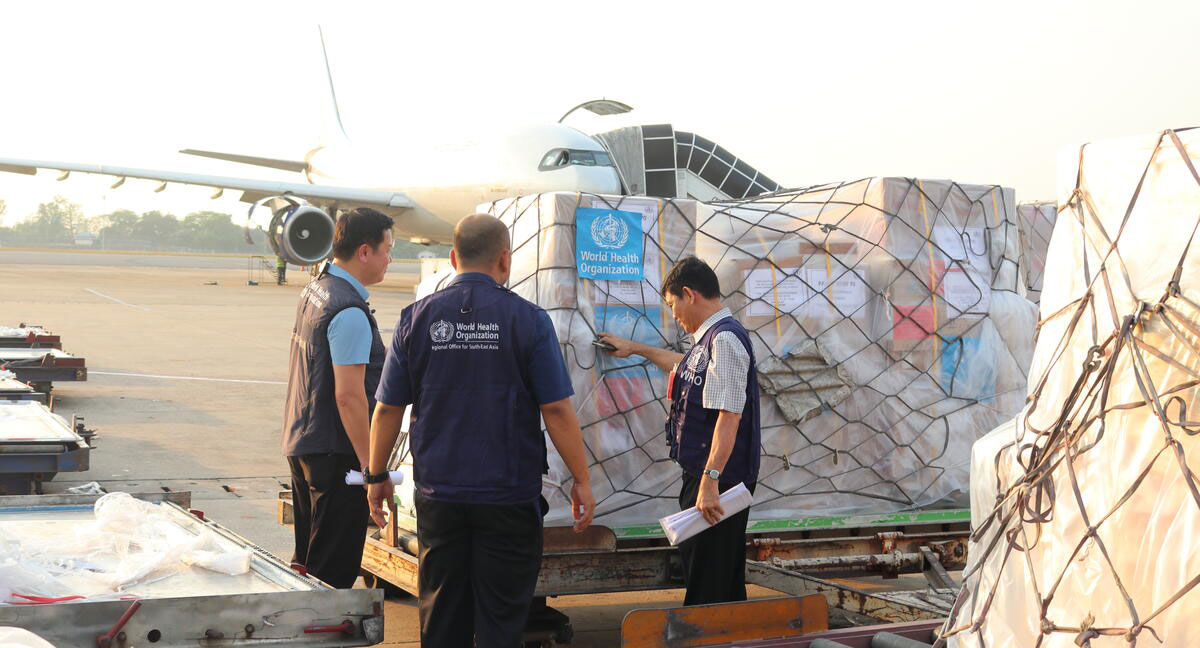
WHO played a central role in major humanitarian responses. In Gaza, WHO coordinated and managed the supply chain for itself and its partners, organizing transport and shipment of 952 trucks of emergency health supplies. WHO also coordinated over 95 Health Cluster partners delivering nearly 33 million medical consultations while scaling up or restoring where possible critical health services, including primary care, hospitals, emergency teams and medical evacuations for severely ill patients. In Myanmar, following the earthquake, WHO deployed 170 tonnes of supplies and coordinated more than 20 emergency medical teams.
Conflicts continued to severely impact health systems worldwide with 3 050 attacks on health care were reported, resulting in nearly 2 925 deaths and more than 2 962 injuries among health workers and patients. Through the Global Health and Peace Initiative, WHO strengthened efforts to support resilient health systems, improve access to care and promote stability in fragile settings.
As the Inter-Agency Standing Committee Health Cluster Lead Agency, WHO coordinated over 1 500 humanitarian partners across 24 crisis settings targeting 173.1 million people for health assistance. As of 31 December 2025, 113 million people were reached, including more than 169 million outpatient consultations, 5.1 million trauma consultations, over 3.6 million safe deliveries and 6.9 million mental health consultations.
-
 HQ-2_Building partnerships and networks for collective action
WHO advanced global collaboration and preparedness through new frameworks, strengthened response networks, and improved coordination for medical countermeasures and research. Following a two-year design process, WHO launched the Global Health Emergency Corps (GHEC) framework in 2025, providing countries with a model to strengthen emergency workforces, surge capacity and leadership networks.
Operational impact was delivered through global response networks. The Global Outbreak Alert and Response Network conducted 111 deployments for 27 emergency operations across 25 countries and trained more than 580 responders through 24 capacity-strengthening events, while expanding with 50 new partner institutions. Emergency Medical Teams supported by WHO delivered more than 4.36 million consultations, with over 81 countries developing national EMT capacities, alongside 64 internationally certified teams and more than 110 000 trained professionals.
The WHO Hub for Pandemic and Epidemic Intelligence in Berlin expanded global collaboration. The International Pathogen Surveillance Network grew to 309 partners across 101 countries, strengthening genomic surveillance and contributing to negotiations on the Pandemic Agreement’s Pathogen Access and Benefit-Sharing system. The Hub’s Collaboratory connected over 1 300 experts from 50 countries to advance disease analytics and modelling. WHO continued to work with national public health agencies in 120 countries to strengthen preparedness capacities.
WHO strengthened access to life-saving vaccines and treatments through the WHO-hosted International Coordination Group on Vaccine Provision, which approved over 103.9 million vaccine doses for 113 emergency requests for meningitis, cholera, yellow fever and Ebola. A global stockpile of the monoclonal antibody Inmazeb® for Ebola treatment was established, with 450 treatment courses available for rapid deployment within 24 hours of outbreak confirmation. In addition, the ICG allocated 68 885 vials of ceftriaxone to support
Global research collaboration also expanded. The WHO BioHub coordinated pathogen sample sharing across laboratories in nine countries, while i-MCM-Net brought together 50 organizations to improve global planning for development, manufacturing and equitable access to medical countermeasures. The Pandemic Influenza Preparedness Framework mobilized more than US$ 350 million to strengthen preparedness in over 80 countries. In parallel, WHO advanced scientific collaboration through the Scientific Advisory Group for the Origins of Novel Pathogens and expanded the CoViNet global coronavirus laboratory network.
-
HQ-2_Consolidating Gains in the Last Strongholds of Wild Poliovirus - From Resurgence to Reduction
Despite challenges in reaching the polio eradication goal, reported wild polio cases fell by 56% in 2025, with similar declines in circulating vaccine-derived polio virus cases. Progress on polio transition was context-specific, with some countries integrating polio functions into national health systems, while high-risk and fragile settings made slower gains.
In Pakistan, implementation of the “2–4–6 strategy” strengthened oversight and operational performance in high-risk districts, while expanded community engagement and integrated service delivery approaches contributed to closing immunity gaps. In Afghanistan, the programme continued to adapt to operational constraints by optimizing site-to-site and fixed-post vaccination strategies in areas where house-to-house campaigns were not feasible, while sustaining nationwide access through continued engagement with de facto authorities and frontline health workers, including women vaccinators.
Cross-border coordination between Afghanistan and Pakistan was further strengthened through synchronized campaigns, joint planning and enhanced surveillance along key transit corridors to mitigate the risk of cross-border transmission. WHO, in collaboration with national authorities and Global Polio Eradication Initiative (GPEI) partners, maintained surge technical support in the highest-risk geographies and sustained high-level advocacy to ensure eradication remained a national priority.
-
 HQ-2_Strengthened global health security by detecting, assessing, and responding to public health threats worldwide
Despite contextual challenges and financial constraints, WHO continued to strengthen global health security by detecting, assessing and responding to public health threats worldwide.
Through its global surveillance systems, WHO assessed approximately 5.4 million signals of potential health events and verified around 693 threats with governments and partners, helping to prevent disease spread and save lives. WHO also responded to 66 emergencies across 88 countries and territories, including conflicts, disease outbreaks and natural disasters.
Among these were 32 Grade 3 emergencies (15 acute and 17 protracted) requiring the highest level of organization-wide support. Rapid deployment of experts, technical guidance and essential medical supplies enabled countries to respond effectively to complex crises.
Several major outbreaks were successfully controlled. In the Democratic Republic of the Congo, the Ebola virus disease outbreak was contained within six weeks following the deployment of 112 experts and frontline responders, the delivery of more than 150 tonnes of medical supplies, and the vaccination of over 47 000 people. An innovative treatment unit, developed with WHO and partners, was deployed for the first time, improving patient care. The United Republic of Tanzania and Ethiopia also contained outbreaks of Marburg virus disease.
WHO supported countries to detect, treat and prevent cholera. During the reporting period, more than 1.7 million cases were reported across 60 countries, with over 13 600 deaths. WHO provided essential medical supplies and 82.3 million oral cholera vaccines through the global emergency stockpile.
Emerging infectious disease threats were closely monitored, with WHO conducting regular risk assessments and updating global recommendations, including on influenza vaccine composition. The WHO Hub for Pandemic and Epidemic Intelligence further strengthened detection capacities, with its AI-powered system used by over 120 countries and 31 organizations.
In response to mpox in Africa, WHO mobilized US$ 57.8 million, supported vaccination of more than two million people, and strengthened surveillance and case detection, contributing to control of the epidemic, allowing WHO to lift the emergency declaration in September 2025.
-
 HQ-2_Delivering landmark agreements and innovative financing modalities to strengthen multilateral response
A milestone achievement under this Billion was the adoption of the Pandemic Agreement by the Seventy-eighth World Health Assembly, a landmark global framework to strengthen preparedness and protection against future pandemics. The Agreement promotes stronger international collaboration, greater transparency and more equitable access to vaccines, medicines and diagnostics, and lays the foundation for a global pathogen-sharing system to enhance research, surveillance and readiness.
In parallel, countries adopted amendments to the International Health Regulations (IHR), reaffirming their commitment to collective action in response to public health emergencies. The revised regulations reflect lessons learned from the COVID-19 pandemic and strengthen mechanisms for early detection, information sharing and coordinated response. Together, the WHO Pandemic Agreement and the IHR, as amended, highlight the critical importance of WHO’s convening role in strengthening global health security.
Through the Pandemic Fund, WHO also supported 70 countries to strengthen key pandemic preparedness capacities, including surveillance systems, laboratory networks, workforce development and multisectoral coordination. These investments directly supported country responses to emerging health threats, including accelerating preparedness activities during the mpox outbreak. The Fund also catalyzed additional domestic and partner investments, reinforcing sustainability and strengthening national ownership of preparedness efforts.

An estimated 1.75 billion more people are living healthier lives, largely surpassing the 1 billion target. Progress has been driven largely by improvements in environmental factors and determinants of health, particularly increased access to clean household energy, WASH services, and reductions in air pollution, tobacco use and alcohol consumption, reflecting sustained gains in living conditions and infrastructure. In contrast, rising obesity among adults and children remains a growing concern, partially offsetting these gains.
GPW13 Output indicator achievements
| GPW13 Outcome / Indicator scope | Total output indicators | Achieved | Not achieved | |||
|---|---|---|---|---|---|---|
| Slightly below target (≤10%) | Below target (>10%) | Trend lens: positive trajectory* | ||||
| 3.1 | Determinants of health addressed | 7 | 0% | 14% | 100% | |
| Social determinants | ||||||
| Food safety | ||||||
| 3.2 | Risk factors reduced through multisectoral action | 4 | 25% | 0% | 100% | |
| Risk factors | ||||||
| Multisectoral partnerships | ||||||
| 3.3 | Healthy settings and Health in All Policies promoted | 6 | 0% | 17% | 100% | |
| Environmental determinants and climate change | ||||||
| Healthy environments | ||||||
| Total | 17 | 6% | 12% | 100% | ||
* Indicators that were not achieved at the end of 2024-25 but nonetheless showing overall improvement over the course of the Thirteenth General Programme of Work.
Progress was strongest in the areas addressing social determinants of health, risk factors and healthy settings, largely driven by WHO’s institutionalized guidance (e.g. WHO Framework Convention on Tobacco Control and MPOWER FCTC), strong technical standards and tools in areas such as nutrition, food safety, and air quality, and flagships on social determinants of health. Remaining challenges are largely due to country-level capacity constraints and external factors, including industry influence, limited financing, and weak policy enforcement.
WHO’s strong convening roles supported achievements.
-
HQ-3_One Health as a global policy priority
WHO elevated One Health as a global policy priority through high-level political engagement. At the G20 Health Ministerial Meeting in 2024, WHO supported the organization of a dedicated One Health High-Level Meeting, bringing together G20 members, partner organizations, and invited countries. This engagement helped position One Health as a practical policy approach to address interconnected risks such as zoonotic diseases, antimicrobial resistance, food safety, and environmental threats. By strengthening multisectoral dialogue and reinforcing collaboration through the Quadripartite partnership, WHO contributed to increased political commitment and greater alignment of national approaches. These efforts are expected to translate into stronger governance frameworks and improved prevention and preparedness capacities across sectors.
-
 HQ-3_Addressing Air Pollution: WHO's Global Road Map Progress
Environmental health action was strengthened through the Global Road Map on Air Pollution and Health.
Air pollution is the leading environmental risk to health, contributing to approximately 7 million premature deaths annually. Around 99% of the global population is exposed to air pollution levels exceeding WHO air quality guidelines, with the greatest impacts in low- and lower-middle-income countries.
In response to this major public health threat, the WHO Secretariat played a pivotal role in facilitating the adoption of the updated Global Road Map on Air Pollution and Health at the World Health Assembly in May 2025. This milestone includes a commitment to halve the health impacts of air pollution by 2040. WHO also convened the Second Global Conference on Air Pollution and Health in March 2025, in collaboration with Colombia, mobilizing Member States and over 47 million health professionals and aligning clean air action with noncommunicable disease and Sustainable Development Goal targets.
-
HQ-3_ Addressing Determinants of Health Through Multisectoral Action
The Secretariat supported a three-year multistakeholder process culminating in the adoption of the 2025 Political Declaration on NCDs and mental health by 175 Member States, marking the strongest global mandate for NCD and mental health action to date. The Declaration emphasizes the integrated nature of health challenges and positions NCDs and mental health as central to sustainable development and social justice, reinforcing equity and access as central pillars.
The impact is already observable. Technical assistance has been provided to over 50 countries to improve NCD prevention and management through primary health care strategies. The REPLACE initiative has enabled 53 countries to adopt best-practice policies, benefitting approximately 3.7 billion people. Additionally, efforts to combat obesity through the WHO Acceleration Plan have led to multisectoral policy implementation in 34 countries.
-
 HQ-3_Acceleration Plan to Stop Obesity
In nutrition, 34 countries engaged in the Acceleration Plan to Stop Obesity, while exclusive breastfeeding rates increased from 39% to 47%, and continued breastfeeding up to two years increased from 38% to 50%, reflecting progress in maternal and child nutrition.
WHO issued guidance on GLP-1 therapies for obesity, sodium reduction and anaemia thresholds, alongside policy tools on fiscal measures and school food environments. The WHO Validation Programme for Trans Fat Elimination recognized five countries in 2024 and four in 2025 for progress in eliminating industrially produced trans fats. WHO also advanced air quality, hand hygiene and food safety standards.
Across the Thirteenth General Programme of Work, pillar 4 indicators showed a modest but steady upward trajectory. In 2024-25, performance showed steady but constrained progress: 34% of output indicators were met, with a further 10% close to target. Notably, of the 27 indicators that did not fully meet their targets, eight (30%) nonetheless demonstrated a positive trajectory over the Thirteenth General Programme of Work.
GPW13 Output indicator achievements
| GPW13 Outcome / Indicator scope | Total output indicators | Achieved | Not achieved | |||
|---|---|---|---|---|---|---|
| Slightly below target (≤10%) | Below target (>10%) | Trend lens: positive trajectory* | ||||
| 4.1 | Strengthened country capacity in data and innovation | 11 | 0% | 45% | 40% | |
| Health information systems | ||||||
| Health impact monitoring | ||||||
| WHO norms and standards | ||||||
| 4.2 | Strengthened leadership, governance and advocacy for health | 18 | 0% | 72% | 23% | |
| WHO leadership | ||||||
| WHO accountability, response to sexual abuse | ||||||
| Sustainable financing | ||||||
| Programme budget and results-based management | ||||||
| WHO transformation | ||||||
| Equity, gender, human rights and disability | ||||||
| 4.3 | Financial, human and administrative resources managed in an efficient, effective, results oriented and transparent manner | 12 | 33% | 42% | 33% | |
| WHO financial management | ||||||
| WHO human resources | ||||||
| WHO digital platforms and services | ||||||
| WHO safe and secure environment | ||||||
| Total | 41 | 10% | 56% | 30% | ||
* Indicators that were not achieved at the end of 2024-25 but nonetheless showing overall improvement over the course of the Thirteenth General Programme of Work.
-
HQ-4_Normative core mandate WHO Collaborating Centres
To strengthen its normative core mandate, WHO secured resources to launch the three-year “Guidelines 2.0” project to modernize guideline development through a “living” approach. The model prioritizes key clinical and public health questions, continuously monitors emerging evidence, and rapidly incorporates new findings to update recommendations as soon as evidence becomes available. Updates are published in real time through digital platforms. Thanks to WHO’s engagement with WHO Collaborating Centres 4 000 activities supporting regional and global programmes were delivered, along with over US$ 25 million in in-kind contributions.
-
HQ-4_WHO’s leadership in gender equality, human rights and health equity
By exercising its normative and enabling role across diverse contexts, the Secretariat strengthened WHO’s leadership in gender equality, human rights and health equity. This included targeted analytical and advisory engagement in 14 countries, alongside a primary focus on developing and harmonizing global frameworks, tools and methodologies to support consistent integration of gender equality, human rights and health equity. The Secretariat also strengthened organizational capacity to identify and address structural drivers of inequity through standardized approaches, such as the Barriers Assessment Handbook and by convening a WHO‑wide working group on unmet health care needs and barriers, supporting more coherent assessment and analysis across programmes and settings. Strategic partnerships amplified impact through joint delivery of global public goods, including an intersectional gender analysis toolkit and integration of health considerations into the Committee on the Elimination of Racial Discrimination General Recommendations and the UN Declaration on the human rights of people of African descent.
-
 HQ-4_Comprehensive support to staff to help manage the uncertainty
Fully recognizing the real human impact of these changes, and while ensuring the operational continuity of its critical functions, WHO provided comprehensive support to staff to help manage the uncertainty inherent in such transitions, by designing and implementing a structured approach, guided by the principles of transparency, fairness, and humanity. This approach included strong governance, systematic staff engagement, and practical, staff-facing support. Communication tools, such as weekly newsletters and pulse surveys, enhanced clarity and feedback loops, while special measures, including voluntary early retirement options and separation by mutual agreement, helped mitigate disruption. The launch of the Workforce Transition Support Hub as a single-entry point for career transition workshops and counselling, pensions and insurance briefings, and well-being resources added value, enabling staff to navigate change with timely, centralized guidance. Collectively, these actions supported operational continuity during the transition and helped sustain workforce coherence as WHO adapts to a leaner organizational footprint.
-
 HQ-4_Authoritative legal advice across policy, normative and institutional processes
The Secretariat’s authoritative legal advice across policy, normative and institutional processes were instrumental in strengthening global health governance and protecting WHO’s reputation. The Secretariat supported Member State negotiations leading to the adoption of the WHO Pandemic Agreement and of the Amendments to the International Health Regulations (2005) by providing legal advice on procedural and substantive issues. Legal advice on funding suspensions mitigated financial and operational risks.
-
 HQ-4_Organization-wide reprioritization, realignment and sustainability exercise
WHO responded promptly and strategically to this new financial reality, by undertaking a transparent, organization-wide reprioritization, realignment and sustainability exercise. This process reduced the 2026–2027 budget from $5.3 billion to $4.2 billion and aligned staffing and structures with the revised budgetary envelope, while safeguarding WHO’s core mandate, including normative functions and country office capacity. A key achievement of this process was the increase in the assessed contributions. The Secretariat’s proactive and transparent approach to realignment fostered trust among Member States, leading to the successful approval of the second increase of assessed contributions by the Seventy-eighth World Health Assembly, despite uncertainties in the global funding landscape. By aligning resources more closely with its core mandate, the Organization has streamlined operations and strengthened its focus on critical health priorities.
PROGRAMME BUDGET FUNDING AND IMPLEMENTATION
In May 2023, the Seventy sixth World Health Assembly adopted resolution WHA76.1, approving the Programme budget 2024–2025 in the amount of US$ 6 834.2 million. As at 31 December 2025, total financing across all segments amounted to US$7,822.6 million. The level of financing by segment is presented in the table below. As in previous biennia, the financing levels of the polio eradication and emergency operations and appeals segments are driven by epidemiological developments and humanitarian crises and should not be interpreted as over financing.
Programme budget 2024–2025 and its financing and expenditures, by segment, as of 31 December 2025 (US$ million)
| Segment | Approved Programme budget 2024-2025 (US$ million) | Financing (US$ million) | Financing as % of approved budget | Expenditures | Expenditures as % of approved budget |
|---|---|---|---|---|---|
| Base programmes | 4 968.2 | 4 763.6 | 96% | 4 228.3 | 85% |
| Polio eradication | 694.3 | 1 194.4 | 172% | 1 100.5 | 159% |
| Special programmes | 171.7 | 199.4 | 116% | 130.0 | 76% |
| Emergency operations and appeals | 1 000.0 | 1 665.2 | 167% | 1 269.7 | 127% |
| Total | 6 834.1 | 7 822.6 | 114% | 6 728.4 | 98% |
The base segment of the Programme budget was nearly fully financed at 96%. However, this apparent strength masked persistent structural challenges. The base segment continued to rely heavily on specified voluntary contributions, which limited flexibility and constrained the strategic allocation of resources toward priority and underfunded areas. As a result, pockets of under-financing persisted across specific outcomes, outputs, and major offices, despite full aggregate financing of the base budget.
Flexible funding sources, continued to play a critical role in sustaining programme delivery and mitigating funding gaps across the base segment. However, the overall level of flexible funds remained insufficient to achieve equitable financing across technical priorities, outcomes and geographic levels. All three technical strategic priorities remained highly dependent on specified voluntary contributions, which cannot be readily reprogrammed to address emerging needs or persistent shortfalls.
During the biennium, assessed contributions originally planned for 2024–2025 were revised downwards, and a portion of assessed contributions already made available had to be withdrawn from programme implementation to cover non payment and to replenish the Working Capital Fund. These developments further increased dependence on voluntary and earmarked resources.
The Secretariat continued to deploy a combination of financial and managerial measures to safeguard programme delivery. These included the use of programme support cost reserves, reprogramming of funds, cost containment measures in non staff expenditures, and a phased human resources realignment process. By December 2025, these measures had enabled the Organization to close the salary gap for occupied positions, while maintaining delivery of priority activities within the reduced level of financial flexibility.
Implementation performance reflects these dynamics. At end biennium, implementation of base programmes reached 85% of the approved budget, reflecting the combined impact of funding misalignment, earmarking constraints and the application of cost containment measures during the biennium. By contrast, implementation rates in the event driven segments, notably emergency operations and appeals and polio eradication, exceeded approved budget levels, in line with the scale and intensity of operational requirements.
For more detailed information on financing and implementation of the Programme budget 2024–2025, visit the Programme Budget Web Portal
Detailed view on programme funding and implementation
What is the budget's performance?
What are the funding sources?
Who are the top contributors?
How is the funding implemented?
What is the budget's performance?
What are the funding sources?
Who are the top contributors?
What is the funding level?


